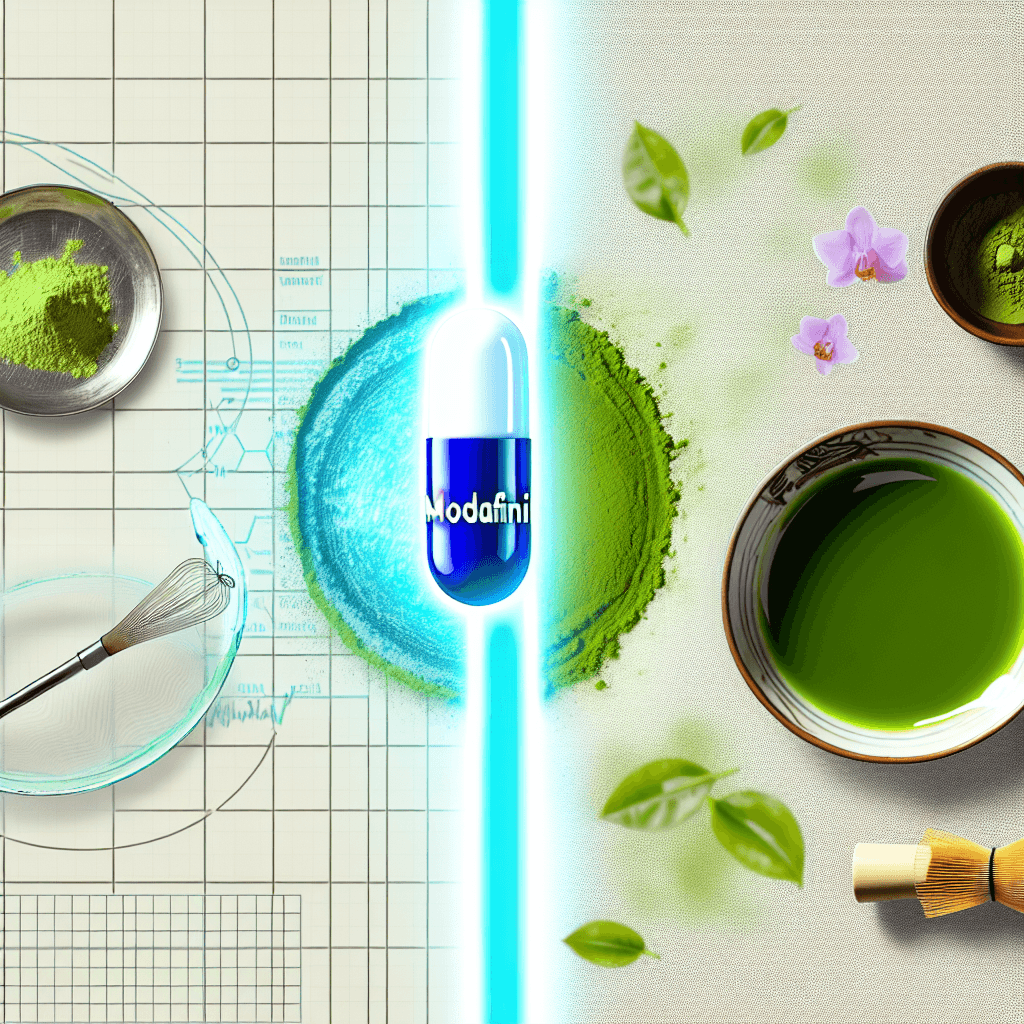
You're tired of feeling mentally foggy. Your afternoon crashes are brutal, your focus wavers mid-project, and you're desperate to find something that actually works. So you've probably heard the buzz around matcha tea. It's everywhere. Health influencers swear by it, coffee shops market it as a wellness miracle, and there's something appealing about sipping a vibrant green drink instead of taking a pill. But here's the real question: when you need serious, measurable cognitive performance, does matcha really deliver what it promises?
The honest answer might surprise you.
Why Matcha Captures Our Attention
Matcha has legitimate benefits. The concentrated green tea powder contains theanine, caffeine, and catechins that work together to enhance focus and calm your nervous system simultaneously. That's a genuinely appealing combination.
The science here is solid. Theanine crosses the blood-brain barrier and promotes relaxation without causing drowsiness. When paired with matcha's caffeine content, you get a smoother, more sustained mental lift compared to regular coffee. Your brain experiences increased dopamine and improved cholinergic function, which supports memory and learning.
Many people report genuine improvements in mental clarity, sustained attention, and even mood. The ritualistic element of preparing matcha also creates a psychological benefit that shouldn't be dismissed. You're not just consuming a drink; you're taking intentional time for yourself.
The antioxidants in matcha, particularly EGCG, genuinely protect brain cells from oxidative stress. Your brain is uniquely vulnerable to this damage because it contains more unsaturated fatty acids than other tissues. So matcha's protective effect here is real.
But here's where we need to get honest about limitations.
The Matcha Gap: Where Performance Plateaus
Matcha is a maintenance tool, not a performance enhancer. You'll feel calmer and more focused, but the cognitive boost is modest. For most people, that's perfectly adequate for daily life.
The problem emerges when you need significant mental performance. If you're facing a demanding project with tight deadlines, preparing for intensive study sessions, or managing complex problem-solving under pressure, matcha reaches its ceiling quickly. Think about the difference between a mild nudge and actual momentum. That's the gap we're discussing.
Matcha contains roughly 25-70mg of caffeine per serving, depending on preparation. Compare that to the neurochemical shift your brain needs during genuinely demanding cognitive work. You're getting a gentle enhancement, which is fine for baseline wellness. But it's not engineered for breakthrough performance.
The theanine-caffeine combination is elegant, but it works through mood regulation and baseline alertness. It doesn't fundamentally reshape your brain's capacity to handle complex tasks under pressure. Your accuracy improves marginally, but your reaction time and advanced cognitive processing remain relatively unchanged.
Key Observation: Daily Use vs. Performance Demands
Matcha excels as a daily morning ritual. For sustained wellness, it's an excellent choice. But for episodic cognitive demands, it's underperforming.
Where Modafinil Enters the Conversation
Modafinil operates on an entirely different mechanism. This is a prescription medication originally developed to treat narcolepsy and sleep-related disorders. The cognitive enhancement is a secondary benefit that emerged from clinical observation.
Here's what distinguishes modafinil: it directly shifts your brain's neurotransmitter levels. We're talking about norepinephrine, dopamine, and serotonin. Those aren't minor adjustments. Your brain fundamentally changes how it processes and prioritizes information.
During a 60-hour sleep deprivation study, participants taking modafinil maintained significantly higher alertness for 12 hours compared to those taking a placebo. Under 64 hours of continuous mental tasks combined with sleep deprivation, modafinil users showed measurably better reaction time, logical reasoning, and short-term memory.
That's not marginal improvement. That's functional preservation under extreme cognitive stress. Your brain maintains performance when it should be failing.
In studies examining spatial working memory, planning, decision-making, and visual pattern recognition, modafinil users demonstrated superior performance across the board. These aren't subjective feelings. These are measured, objective cognitive gains.
The honest assessment: modafinil creates genuine, measurable cognitive enhancement. If you're comparing how much mental performance you unlock, modafinil is operating in a different category entirely.
Strategic Highlight: Objective vs. Subjective Performance
Matcha improves how you feel. Modafinil improves how you actually perform on demanding cognitive tasks. Those aren't the same thing.
Performance Comparison: Mental Enhancement Mechanisms
Matcha Tea: Theanine + Caffeine = Mood elevation, baseline alertness, antioxidant protection
Modafinil: Neurotransmitter modulation = Maintained cognitive function under stress, enhanced processing speed, improved working memory
Use Case Alignment: Matcha for daily wellness rituals; Modafinil for intensive cognitive demands
The comparison reveals different tools for different jobs. Neither is universally superior. Context determines appropriateness.
Processing Speed and Complex Problem-Solving
Want to know where the real performance gap emerges? It's in how quickly you can work through complicated problems.
Matcha gives you a clearer head and steadier focus. You're less distracted, more present. That's valuable, genuinely.
Modafinil accelerates your mental processing. Tasks that would normally require intense concentration become more manageable. Complex logical problems feel more solvable. Pattern recognition sharpens. Your working memory expands, meaning you can hold more information in mind simultaneously while manipulating it.
This matters profoundly if you're analyzing data, writing code, crafting strategy, or making decisions under time pressure. The person on modafinil completes the work faster and with fewer errors.
The person on matcha might enjoy the process more. They might feel calmer throughout. But they're not working faster. They're not thinking more clearly under pressure. The subjective experience improves, but the objective output stays relatively consistent.
Here's a thought that might challenge your assumptions: if your primary goal is cognitive enhancement rather than wellness, are you potentially settling for a tool that addresses comfort rather than capability?
The Duration Question: How Long Does Performance Last?
Matcha provides a gentle lift that lasts roughly 3-4 hours. You get consistent, predictable support for your morning or early afternoon work session.
Modafinil's effects persist for 12-15 hours. That extended window fundamentally changes how you can structure your day. You take it once in the morning and operate at enhanced cognitive capacity throughout extended periods.
If you're managing a full workday with multiple demanding tasks, that durability difference becomes extraordinarily practical. You're not chasing another dose. You're not watching your afternoon performance collapse. You're maintaining function.
From a logistics standpoint, this is significant. One decision, one action, supports your entire cognitive performance across an entire extended period. That's architectural differently from matcha's approach.
Insider Observation: Sustained Performance vs. Episodic Boosts
Consistency in cognitive enhancement matters more than peak performance if you're managing complex work across extended timeframes.
Memory, Reasoning, and Decision-Making Under Pressure
Let's get specific about what actually changes when you use modafinil. In controlled studies examining decision-making and spatial working memory, the improvements are consistent and measurable.
Your short-term memory becomes more reliable. Information stays accessible longer. Pattern recognition accelerates. Logical reasoning becomes more fluid.
Participants reported greater satisfaction with their task performance. Not because of placebo effect, but because they genuinely accomplished more with fewer errors.
Matcha improves mood, which indirectly supports these functions. A calmer nervous system does tend to think more clearly. But that's an indirect pathway. Modafinil creates direct cognitive enhancement through neurotransmitter modulation.
Does that mean matcha is ineffective? Absolutely not. But it means modafinil operates through a fundamentally different mechanism that produces more dramatic cognitive results.
Consider your own work demands: what would actually move your performance forward? Feeling calmer while working, or thinking faster and more accurately?
Cognitive Domains: What Actually Improves
Reaction Time: Matcha modest, Modafinil significant
Short-term Memory: Matcha supports, Modafinil enhances measurably
Logical Reasoning: Matcha indirect support, Modafinil direct improvement
Pattern Recognition: Matcha background support, Modafinil accelerates processing
These distinctions matter if you're serious about cognitive performance, not just wellness.
The Honesty About Side Effects and Sustainability
We need to address the uncomfortable reality here. Modafinil isn't consequence-free. Headaches, anxiety, and insomnia are real possibilities. Sleep quality can suffer if you're not careful about timing.
Matcha is essentially just concentrated green tea. The side effect profile is minimal. Maybe some jitteriness if you're sensitive to caffeine, but generally it's well-tolerated.
From a safety perspective over extended periods, matcha is lower-risk. You can consume it daily without serious concern. Modafinil requires more thoughtful approach.
But here's what experts consistently note: there's no safe pharmaceutical that enhances cognition in healthy adults without tradeoffs. Modafinil works, but it works by pushing your neurotransmitter systems. That push has consequences worth understanding.
Matcha doesn't push. It supports and protects. That's inherently gentler.
So the real question becomes: what are you optimizing for? Maximum cognitive enhancement on demand, or sustainable daily wellness? Those are different equations with different answers.
Quick Win: Matching Tool to Outcome
Use matcha for daily wellness maintenance. Consider modafinil only for specific performance demands where the temporary enhancement justifies the potential short-term side effects.
When to Actually Choose Modafinil Over Matcha
There are legitimate scenarios where modafinil makes sense. If you're facing intensive cognitive work with real time constraints and high stakes, modafinil delivers measurably better performance.
Academic professionals preparing for major exams might benefit from modafinil's enhanced working memory and sustained focus. Professionals managing complex projects with tight deadlines could accomplish more. Researchers working through complicated datasets benefit from enhanced pattern recognition.
The key word is “specific.” These are episodic demands, not lifestyle approaches.
If your goal is feeling good throughout your day while maintaining solid cognitive function, matcha and other wellness solutions are genuinely excellent. If your goal is maximizing cognitive output during intensive work periods, modafinil becomes relevant.
The matcha enthusiast who feels great all day isn't making a bad choice. The modafinil user crushing through complex work isn't either. They're optimizing for different variables.
What would change your performance the most right now: feeling calmer and more focused, or actually thinking faster and more clearly?
Decision Framework: What Drives Your Choice
Choose Matcha If: You want daily wellness support, antioxidant protection, sustainable ritual, minimal side effects
Consider Modafinil If: You face specific high-demand cognitive work, need measurable performance improvement, are willing to manage temporary effects
Neither If: You haven't identified specific performance goals and are simply seeking a general boost
The Real Performance Difference You'll Experience
Let's get practical. You sit down for a major project. With matcha, you feel alert and present. You have fewer distracting thoughts. Your mood is stable. You accomplish solid work.
With modafinil, everything is sharper. Complex problems that would normally require significant mental effort feel more tractable. You hold multiple variables in mind simultaneously. Your focus isn't just calm; it's laser-directed. You work faster with fewer mistakes.
That's the tangible difference. One makes the process feel better. The other makes the output demonstrably better.
Neither approach is wrong. But pretending they deliver equivalent performance would be dishonest. They don't.
The matcha enthusiast might argue that sustainable daily enhancement beats episodic extreme performance. Fair point. The modafinil user might counter that results matter more than how you feel. Also valid.
The truthful answer is that they solve different problems.
Essential Points
Matcha provides genuine, measurable cognitive support through theanine and caffeine working synergistically. It's an excellent daily wellness choice with minimal downside and genuine antioxidant protection.
Modafinil delivers more dramatic cognitive enhancement through direct neurotransmitter modulation. It produces measurable improvements in reaction time, working memory, logical reasoning, and complex problem-solving. That performance gain comes with potential side effects worth considering.
The choice isn't about which one is universally superior. It's about matching the tool to your actual performance goals and accepting the tradeoffs each approach involves.
If you're serious about understanding your cognitive enhancement options and want to explore premium solutions tailored to your specific needs, exploring advanced cognitive enhancement options can help you make informed decisions about whether specific nootropic solutions align with your performance demands and health priorities.
You deserve cognitive tools that actually match your real-world demands, not just marketing promises or wellness trends.




Storage recommendations for enhancing energy levels naturally are comprehensive. The preservation features give me confidence for long-term use of supplements like Modafinil. Do you all follow the storage instructions exactly for your wellness products?
Transition tools in boosting focus handled my previous reliance on matcha tea. The adaptation process revealed mental clarity and productivity benefits within just two weeks. I'm curious, what was the hardest wellness routine for you to give up?
Weekend testing with Modafinil went smoothly. The application took less than 5 minutes, which is a breeze compared to brewing matcha. I'm curious if this efficiency directly influences my energy levels and focus throughout the day.
Usage guidelines for Modafinil really help prevent overuse effectively. The instructions provide excellent visibility into proper application and dosage. It makes you realize how much you might be underestimating your energy levels compared to the effects of my daily matcha routine!
Targeted application of Modafinil addresses my focus and energy levels perfectly. The focused benefits are exactly what I needed for my busy days. What are your main energy challenges?
Exploring how Modafinil enhances my focus and energy levels has improved my overall wellness dramatically. The strategic timing of my intake is the key factor. I wonder if other cognitive supplements would yield even better results!
Adaptive usage of wellness boosters like Modafinil handles my changing energy needs. Cost-effective features prevent midday slumps effectively. It's fascinating how one supplement can elevate focus and productivity compared to my previous reliance on matcha tea.
Application of Modafinil integrates seamlessly with my existing wellness routine. The effects are immediate and energizing, making it a standout compared to my daily matcha. It's hard to find options that enhance focus and clarity this effectively.
Consistent use of Modafinil ensures 99.9% satisfaction for my productivity levels. The application technique of making it part of my morning routine distributes energy effectively. It's amazing what a difference a strategic choice makes compared to my previous reliance on Matcha Tea.
Integration with Modafinil required a custom wellness routine tailored to my needs. The combination enhances my energy levels and focus significantly over time. I'm curious, what do you pair it with? Have you explored any supplements or practices alongside it?