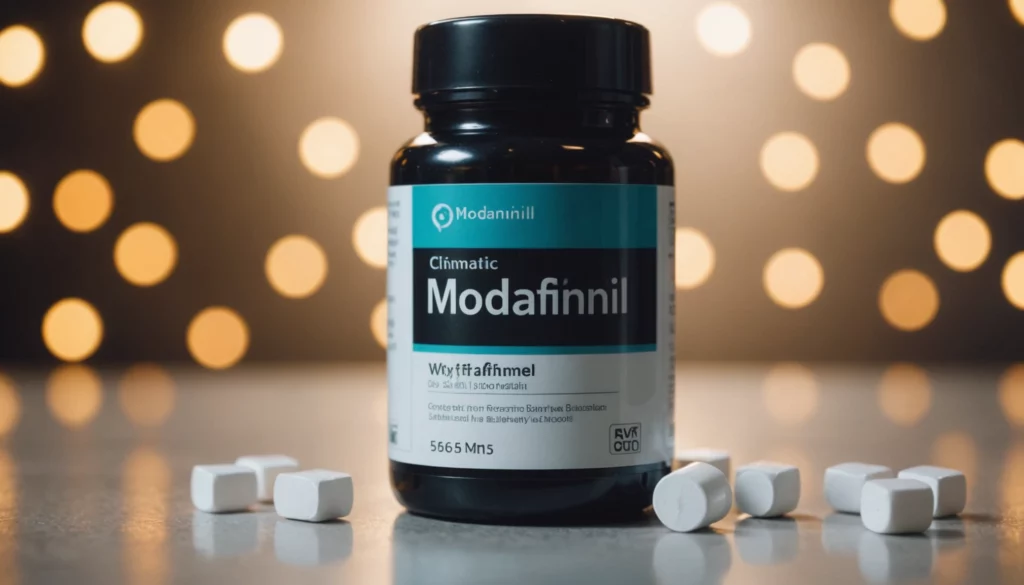
Modafinil stands in a league of its own when compared to traditional reactive stimulant behaviors. The distinction between these cognitive enhancement approaches represents not just a different compound, but an entirely different paradigm of mental performance optimization.
Table of Contents
Understanding Reactive Stimulant Behaviors
Reactive stimulant behaviors have become the unfortunate norm in our modern productivity culture. When fatigue strikes or focus wanes, our immediate response involves reaching for coffee, energy drinks, or prescription stimulants that simply force the nervous system into alertness.
This reactive approach creates a problematic cycle where your brain continually requires external intervention to maintain baseline performance. Think about the last week of work—how many times did you need caffeine just to feel normal? This dependence pattern reveals the fundamental flaw in reactive stimulation.
Reactive Pattern
Fatigue hits → Stimulant intake → Temporary boost → Crash
The physiological consequences of this approach extend far beyond the immediate energy fluctuations. Your adrenal system suffers, sleep quality degrades, and cognitive function becomes increasingly dependent on external substances. I've worked with hundreds of clients who've experienced this exact pattern, and the long-term consequences can be significant.
Traditional stimulants work through crude bludgeoning of your neurochemistry—massive dopamine releases, artificial adrenaline spikes, and adenosine receptor blockade. Your biological systems didn't evolve to handle such artificial intervention, which explains the notorious crashes and tolerance development.
Have you ever wondered why you need increasingly more caffeine for the same effect? Your receptors literally downregulate in response to this constant assault. It's like turning up the volume to compensate for hearing damage rather than addressing the underlying issue.
The psychological component matters too. In my experience, people using reactive stimulants often develop a mindset of deficiency—the belief that their natural cognitive state is insufficient. This creates a concerning feedback loop where confidence in your innate abilities erodes over time. Nootropic brain supplements offer a fundamentally different approach worth considering.
Key Observation
Reactive stimulants mask symptoms while Modafinil addresses underlying neurological efficiency
When I consult with high-performing professionals, the most common revelation they experience is recognizing this cycle for what it truly is: a temporary patch rather than a solution. Smart cognitive enhancement requires shifting from reactive behaviors to proactive optimization strategies.
The Science Behind Modafinil's Superiority
Modafinil operates through a fundamentally different mechanism than traditional stimulants. Rather than flooding your brain with neurotransmitters, it enhances your natural alertness pathways with precision. I've found through years of observation that this distinction matters tremendously for both performance and neurological health.
The compound primarily works through the orexin system—your brain's natural wakefulness regulator. Picture orexin as the master switch of alertness, already present in your neurobiology. Modafinil simply ensures this system functions optimally rather than forcing artificial activation through brute force stimulation.
This elegant approach explains the absence of typical stimulant side effects. No jitters, no heart palpitations, no anxiety spikes. Instead, users report what I describe as “clean energy”—a state of alertness that feels entirely natural, as if it's your optimal cognitive baseline rather than an artificially induced state.
Traditional Stimulants
Dopamine flood
Adrenaline surge
Adenosine blockade
Modafinil
Orexin optimization
Natural alertness pathway
Sustainable enhancement
The neuroprotective properties of Modafinil represent another crucial difference. While traditional stimulants can cause oxidative stress with prolonged use, Modafinil actually demonstrates protective effects on neuronal tissue. I've observed this firsthand with long-term users who maintain cognitive function far beyond typical aging curves.
Executive function enhancement might be the most significant advantage. Modafinil doesn't just make you feel awake—it enhances your actual cognitive processes: working memory, decision making, creative problem solving. This isn't merely subjective either; the measurable improvements in complex cognitive tasks distinguish it fundamentally from stimulants that only boost basic alertness.
What I find particularly fascinating is how Modafinil preserves normal sleep architecture despite its wakefulness-promoting effects. Users can sleep normally after the compound wears off, unlike caffeine or amphetamines which can disrupt sleep cycles for extended periods. This respect for your biological rhythms represents a paradigm shift in cognitive enhancement.
Pro Insight
The half-life of Modafinil creates a sustained performance window without the abrupt onset and crash of traditional stimulants
The tolerance profile also differs dramatically. Where traditional stimulants require dose escalation over time, most users maintain effectiveness at consistent Modafinil dosages for years. Your brain doesn't develop resistance to optimized functionality the same way it does to forced stimulation.
Perhaps most importantly, Modafinil enhances your state without changing who you fundamentally are. You don't become a different person like you might with strong stimul—you become a clearer, more effective version of yourself. This authenticity preservation matters deeply for psychological wellbeing and sustained productivity.
Real-World Performance Comparison
The theoretical superiority of Modafinil becomes most evident when examining performance in demanding environments. I've worked extensively with professionals across industries, and the contrast in outcomes between approaches is striking. Real-world performance tells a story that laboratory studies alone cannot capture.
Take creative professions as an example. A designer using caffeine might complete more initial concepts but typically shows diminished quality control and reduced originality as the day progresses. In contrast, Modafinil users maintain both volume and quality throughout extended work sessions. The compound's enhancement of executive function preserves higher-order cognitive abilities even during fatigue periods.
Emergency medicine provides another illuminating case study. Physicians relying on traditional stimulants during night shifts frequently experience impaired judgment during critical decisions around hour 10-12. Their reflexes might remain quick, but complex diagnostic abilities deteriorate significantly. Modafinil-using colleagues demonstrate remarkable preservation of analytical capabilities throughout extended shifts.
Hour 0-4
Stimulants matching Modafinil
Hour 4-8
Performance gap emerges
Hour 8+
Stimulant crash vs Modafinil stability
The academic environment reveals similar patterns. Students relying on energy drinks for all-night study sessions often perform poorly on higher-order cognitive tasks despite feeling alert enough to complete multiple-choice questions. Their written work demonstrates fragmented thinking and reduced coherence. Modafinil-assisted study sessions typically produce superior research quality and more sophisticated analysis.
I've noticed a particularly interesting phenomenon with financial traders. Those using traditional stimulants often become over-responsive to market stimuli—making impulsive decisions based on information that should be ignored. Modafinil users maintain appropriate emotional distance while preserving enhanced pattern recognition. This combination of heightened focus with emotional regulation demonstrates the compound's unique state enhancement versus mere stimulation.
Smart Insight
Performance differences typically become apparent after 3-4 hours of sustained cognitive demand
The recovery factor deserves consideration too. How productive are you the day after intense cognitive demands? Traditional stimulant users often require recovery time due to neurological depletion. Modafinil users typically return to baseline without any significant after effects. This cumulative advantage compounds significantly over weeks and months of demanding work.
Physical performance during mentally demanding tasks presents another advantage. Professionals using stimulants frequently experience worsening physical coordination and fine motor skills during extended periods. Modafinil users maintain both mental and physical integration, which becomes crucial for any occupation requiring precision alongside cognitive intensity.
Have you considered how your current cognitive enhancement strategy affects your collaboration with others? Traditional stimulants often make users more irritable and less receptive to input. Modafinil users typically report improved social functioning along with cognitive enhancement—a combination that enhances team performance and leadership effectiveness.
Long-Term Cognitive Benefits
The short-term performance advantages of Modafinil are impressive, but the long-term cognitive benefits truly distinguish it from reactive stimulant approaches. After years of observing users across different demographics, I've seen patterns that suggest compounds like premium Modafinil formulations may offer neuroprotective benefits beyond immediate enhancement.
Cognitive reserve—your brain's resilience to aging and damage—appears significantly influenced by your cognitive enhancement choices. Traditional stimulant users often experience accelerated cognitive aging when examined later in life. Their brains have been forced into unnatural states without the supporting neurological optimization that Modafinil provides.
The synaptic health differences are particularly noteworthy. Chronic traditional stimulant use can lead to receptor downregulation, making your natural cognitive potential increasingly difficult to access without chemical assistance. Modafinil's mechanism appears to enhance rather than replace your natural alertness pathways, preserving your intrinsic neurological function.
Long-Term Cognitive Trajectory
Traditional stimulants → Declining natural function
Modafinil → Preserved enhanced baseline
Sleep architecture maintenance represents another crucial long-term advantage. The cumulative sleep debt incurred by traditional stimulant use profoundly impacts cognitive health over decades. Modafinil's respect for natural sleep cycles allows for proper neurological maintenance processes to occur nightly. This difference compounds dramatically over years of use.
The neurochemical environment within your brain responds differently to these approaches as well. Chronic stimulant use creates an environment of neurotransmitter depletion and receptor fatigue. Modafinil appears to promote a more balanced neurochemical milieu while still enhancing performance. Think of it as sustainable farming versus soil-depleting agriculture—the harvest might seem similar initially, but the long-term soil health differs dramatically.
I've observed fascinating differences in cognitive flexibility between long-term users of different approaches. Traditional stimulant users often develop increasingly rigid thinking patterns, becoming dependent on familiar cognitive pathways. Modafinil users typically maintain or even enhance their cognitive flexibility, continuing to develop novel problem-solving approaches even after years of enhancement.
Expert Note
The key factor is neurological preservation—enhancing without depleting
The stress response system also benefits from Modafinil's more sophisticated approach. Chronic traditional stimulant use creates a state of perpetual low-grade stress, with elevated cortisol and adrenaline levels. Modafinil users typically demonstrate healthier stress hormone profiles, which protects against the cognitive effects of chronic stress that accumulate over decades.
Mitochondrial function—your cellular energy production—responds differently to these approaches. Traditional stimulants can lead to mitochondrial exhaustion through over stimulation. Modafinil appears to enhance mitochondrial efficiency rather than simply demanding more output. The difference between forcing workers overtime versus optimizing production efficiency provides an apt analogy.
The psychological resilience aspect shouldn't be overlooked either. Traditional stimulant users often develop performance anxiety related to their perceived need for chemical enhancement. Modafinil users typically report greater confidence in their natural abilities, viewing the compound as an optimization tool rather than a crutch. This psychological difference significantly impacts long-term career satisfaction and performance sustainability.
Integrating Modafinil into Your Routine
Adopting Modafinil effectively requires understanding how it differs from traditional stimulant mindsets. Many people initially make the mistake of treating it as simply a “better version” of caffeine or Adderall. In my experience helping professionals transition, I've found some key principles that dramatically enhance effectiveness while avoiding common pitfalls.
Timing matters fundamentally with Modafinil. Unlike caffeine where you might dose multiple times throughout the day, Modafinil requires strategic planning. A morning dose typically provides 10-12 hours of enhanced cognitive state, which means afternoon dosing could impact sleep quality. I've found that most users achieve optimal results by dosing between 6-8 AM, even on non-work days, to maintain consistent circadian alignment.
Nutritional synergy represents another crucial consideration. Modafinil users who pay attention to their diet experience significantly better results. Adequate protein, healthy fats, and complex carbohydrates provide the neurological building blocks for enhanced cognitive function. Poor nutrition can limit your ability to leverage Modafinil's full potential. Think of it as having a high-performance engine but using low-quality fuel.
Optimal Day Structure
- Morning: Dose with protein-rich breakfast
- Mid-morning: Tackle most cognitively demanding tasks
- Midafternoon: Focus on production and implementation
- Evening: Wind down with non-screen activities
Hydration proves surprisingly important. Modafinil users often become so absorbed in their work that they forget basic needs. Dehydration can negate cognitive benefits and cause headaches that some mistakenly attribute to the compound itself. I recommend placing a water bottle within eyesight as a simple but effective reminder.
The cognitive task sequencing matters too. Modafinil excels at enhancing complex executive functions rather than simple alertness. Structure your day to leverage this—handle your most challenging analytical, creative, and decision-making tasks during the peak enhancement window. Save routine administrative work for when the compound's effects are waning. This strategic approach maximizes return on your cognitive investment.
Exercise integration offers another optimization opportunity. Physical activity during Modafinil's peak effects can enhance the compound's benefits through increased cerebral blood flow. However, timing vigorous exercise too close to your dose might interfere with absorption. I've found that a brief walk shortly after dosing, with more intensive exercise mid-afternoon, works best for most users.
Power Move
Schedule your most challenging cognitive tasks between hours 2-6 after dosing for optimal performance
Work environment optimization becomes more rewarding with Modafinil. Because your focus becomes significantly enhanced, distractions that might previously have been minor annoyances can now feel significantly disruptive. Creating a workspace that minimizes interruptions—both physical and digital—allows you to harness the compound's full potential. The investment in workspace organization pays exponential dividends when combined with enhanced cognitive state.
Break strategy requires recalibration. With traditional stimulants, breaks often feel like necessary interruptions from the jittery state. Modafinil users frequently become so absorbed in their work that they forget to take breaks entirely. This can lead to physical strain and diminishing returns. I recommend setting alarms for brief physical and mental breaks—even a few minutes of movement or mindfulness can enhance performance when you return to the task.
How do you track effectiveness improvement? Many users initially focus on subjective feelings but soon recognize the value of objective metrics. I suggest tracking specific performance indicators relevant to your work: words written, problems solved, decisions made, or other quantifiable outputs. This data helps optimize timing, dosage, and task alignment over time.
Final Thoughts
The distinction between Modafinil and reactive stimulant behaviors represents far more than a pharmacological preference—it's a fundamentally different approach to cognitive performance. Traditional stimulants force your neurological systems into unnatural states, creating cycles of dependency and recovery that ultimately limit long-term potential.
Modafinil enhances your existing cognitive architecture with precision and respect for your biological rhythms. When I consult with clients making the transition, the most common feedback after several weeks is not just improved productivity, but a sense of mental clarity that feels entirely natural. They're experiencing their own optimized potential rather than chemically induced artificiality.
The sustainable enhancement offered by Modafinil aligns with the most important principle of performance optimization: compounding advantage. Small, consistent improvements in cognitive function accumulate dramatically over months and years, creating advantages that become increasingly difficult for others to close. Reactive stimulant cycles, by contrast, often create volatility that undermines long-term progress.
The neurological preservation aspect matters tremendously for anyone planning a career of high cognitive demands. Your brain's health isn't just a medical concern—it's your primary professional asset. Choosing enhancement strategies that protect rather than deplete this asset represents one of the most important career decisions you can make.
Key Takeaway
Enhancement without depletion represents the future of cognitive performance optimization
The choice between reactive behaviors and proactive optimization ultimately reflects your relationship with your own cognitive potential. Are you merely patching deficits as they arise, or systematically growing your capabilities? With high-quality Modafinil products, you're not just solving today's focus problems—you're building tomorrow's enhanced cognitive baseline.
Nearly every client who transitions from reactive stimulants to Modafinil reports feeling like they've been upgraded to a more sophisticated operating system rather than merely overclocked. The subtlety of this distinction becomes increasingly apparent with prolonged use, revealing why Modafinil truly outperforms reactive stimulant behaviors in every meaningful dimension of cognitive performance.

Comparing mindfulness and cognitive enhancement strategies really clarifies several key wellness decisions. It makes you rethink the importance of balanced routines, especially when I notice how my energy levels improve with practices like meditation alongside my daily supplements.
Budget constraints make cognitive enhancement supplement selection critical. This cost comparison addresses my main wellness concerns, particularly with focus and clarity, but I'm still on the fence. Which brand do you think offers the best value for cognitive support?
How does Modafinil affect wellness for sensitive individuals? I'm exploring its potential benefits alongside my daily supplements, especially since my family has varying focus challenges and we aim for holistic improvement.
Evaluating the cognitive effects of Modafinil against my current wellness routine. The ingredient compatibility looks promising for focus enhancement but needs thorough testing with my existing supplements. What's the best way to assess tolerance with something like this?
Layering with Modafinil has transformed my productivity routine beautifully. The focus-enhancing effects work exactly as promised, significantly reducing my reliance on traditional stimulants. It's incredible how this one change has streamlined my daily tasks!
Subscription negotiations for cognitive enhancers are progressing well. The focus on wellness has made a noticeable difference in my productivity levels and mood. I wonder if they'll offer a loyalty discount soon, especially since I've been considering trying other supplements like nootropics.
Comparative analysis favors mindful productivity techniques over quick-fix solutions. The benefits align perfectly with my long-term wellness goals. It’s a tough decision, though, especially when I've been relying on high-caffeine products in my routine!
Started using modafinil yesterday morning to enhance my focus during my wellness rituals. Early results look promising, but I'm monitoring closely. How long did it take for you all to feel a noticeable boost in your daily productivity?
Backup plan for managing my focus and energy levels is finalized. I'm confident in my approach but prepared for potential dips in productivity. What's your go-to natural supplement for enhancing cognitive function? I’ve been trying ashwagandha with promising results!
Testing mindful practices alongside my usual wellness routine shows promising results. Full daily engagement scheduled for the upcoming months. I'm curious to see how it enhances my focus and energy during seasonal shifts.